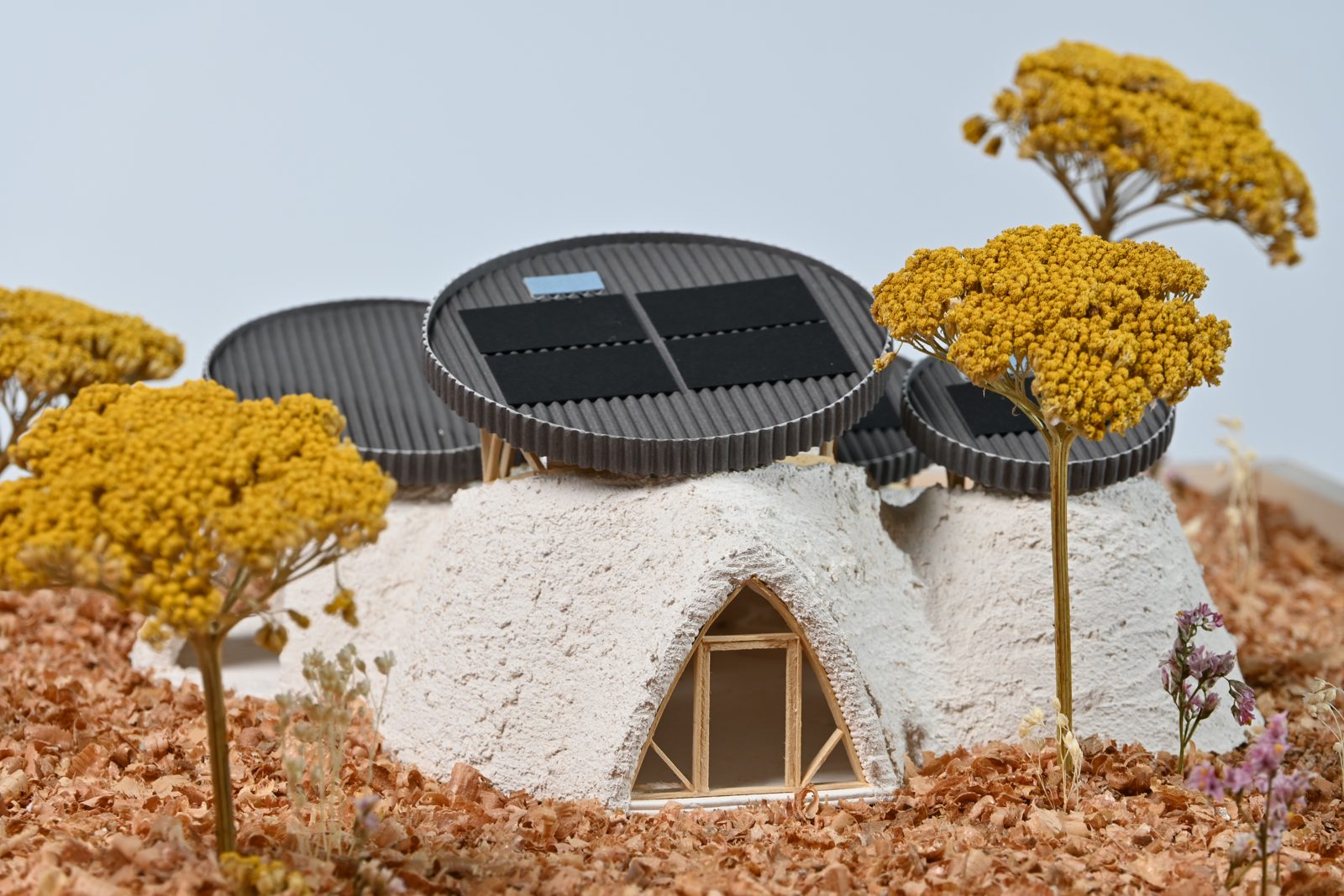
New Vernacular
How can raw earth and 3D printing give healthy, affordable homes in a semi-arid climate?
- Kind
- Research before Studio G01
- By
- Bertalan Ivan, graduation project, MSc Architecture, Urbanism and Building Sciences, TU Delft
- Material
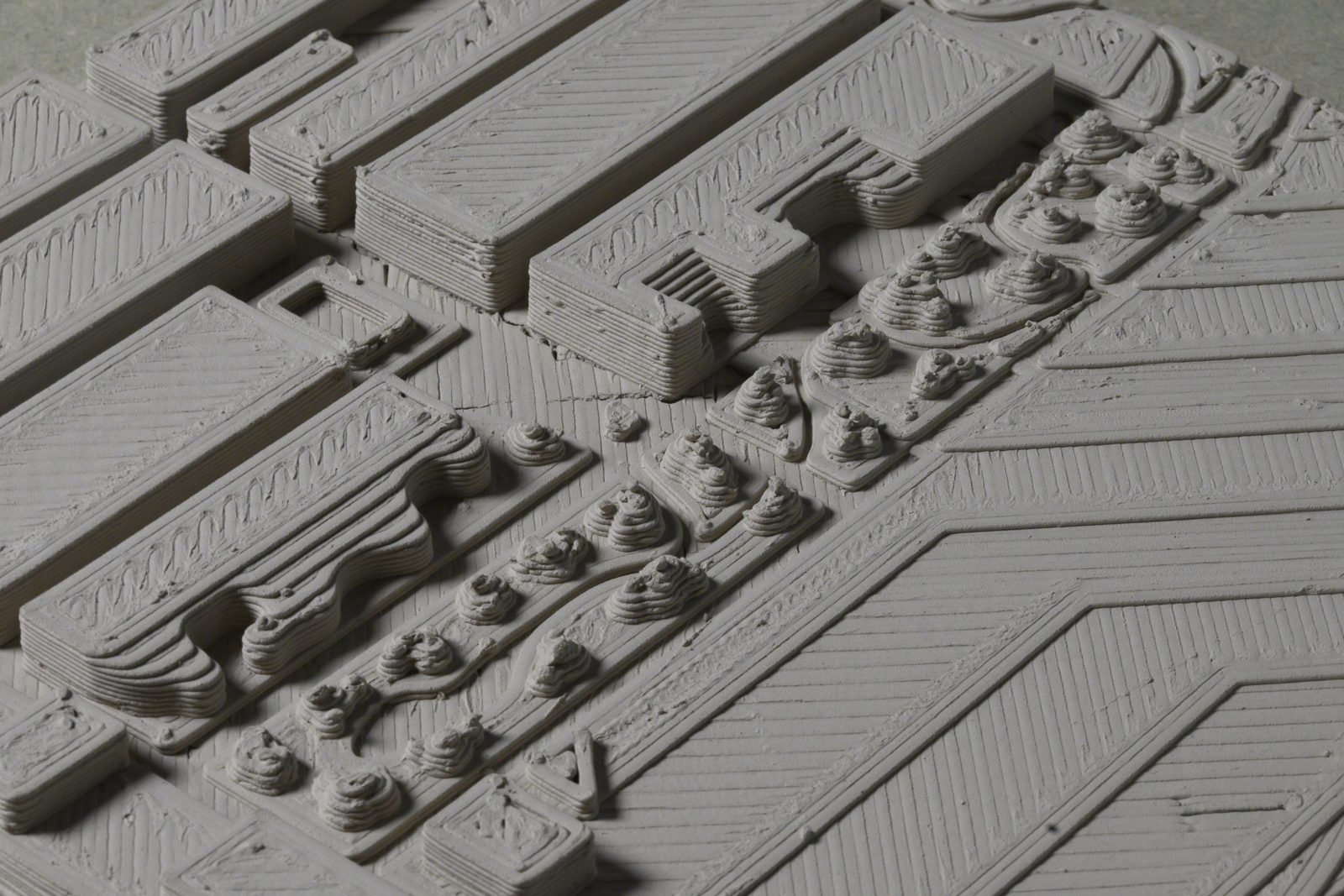
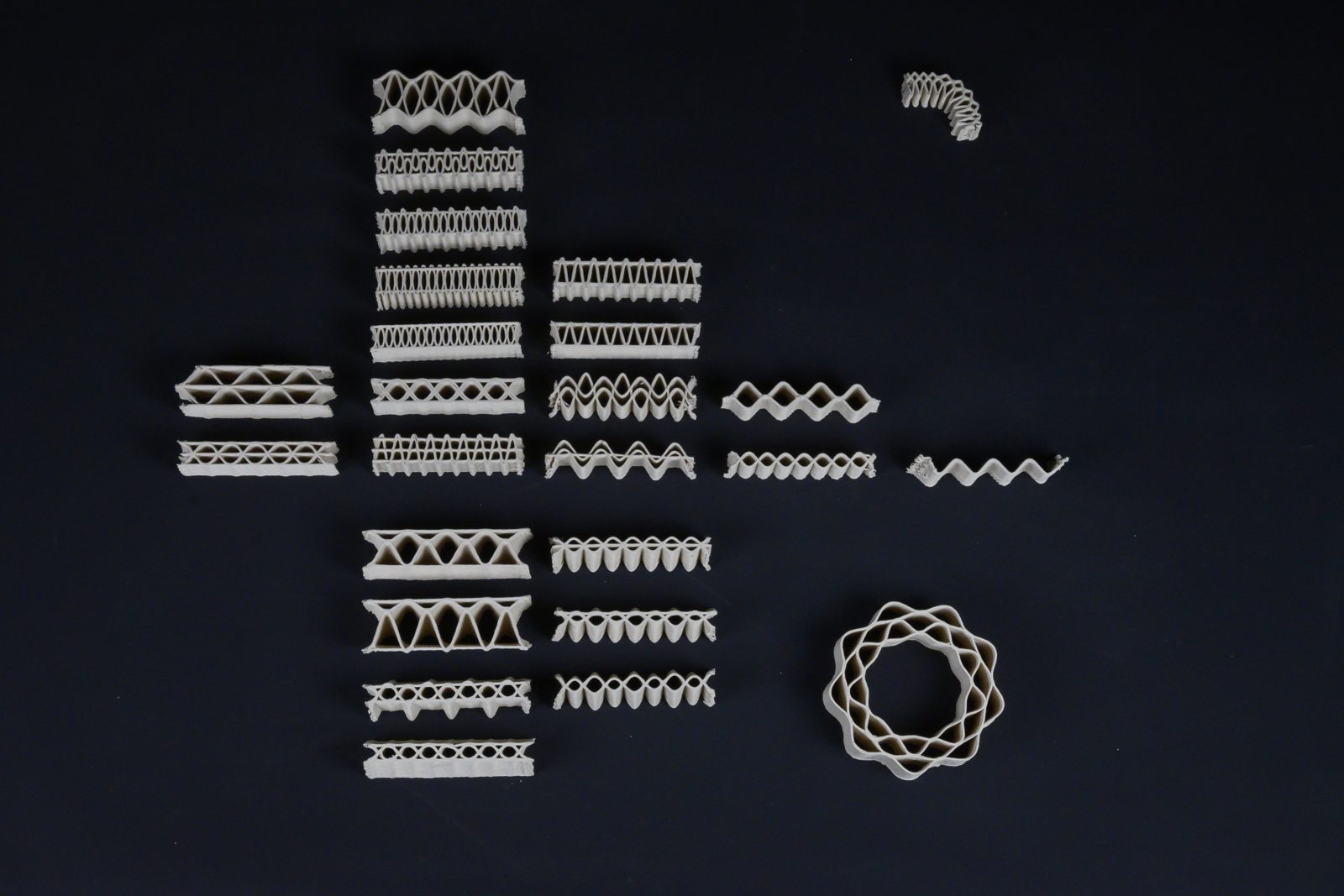
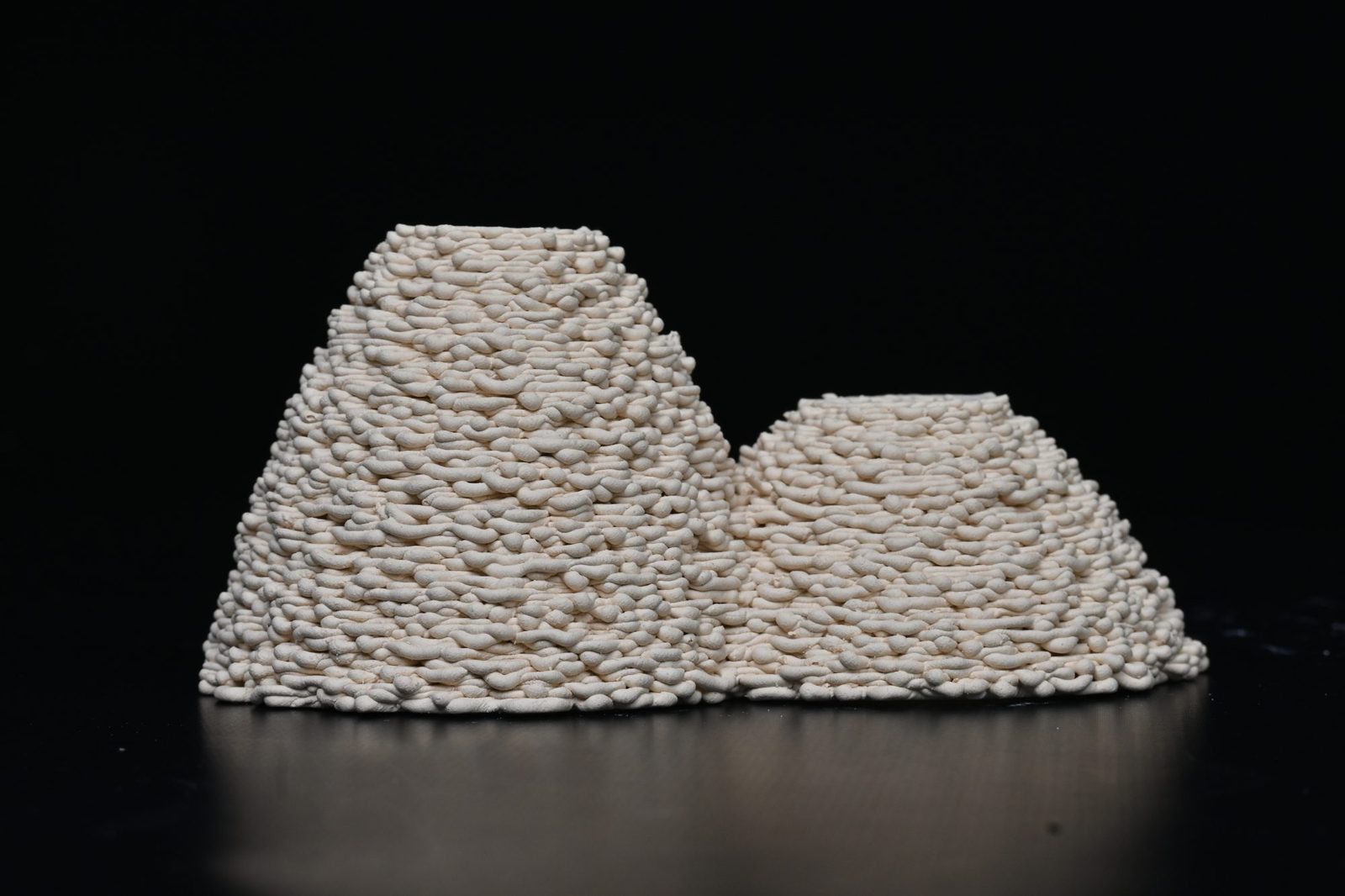
- Raw earth, 3D printed; printed clay models
- Place
- Peal de Becerro, Andalusia
- Year
- 2026
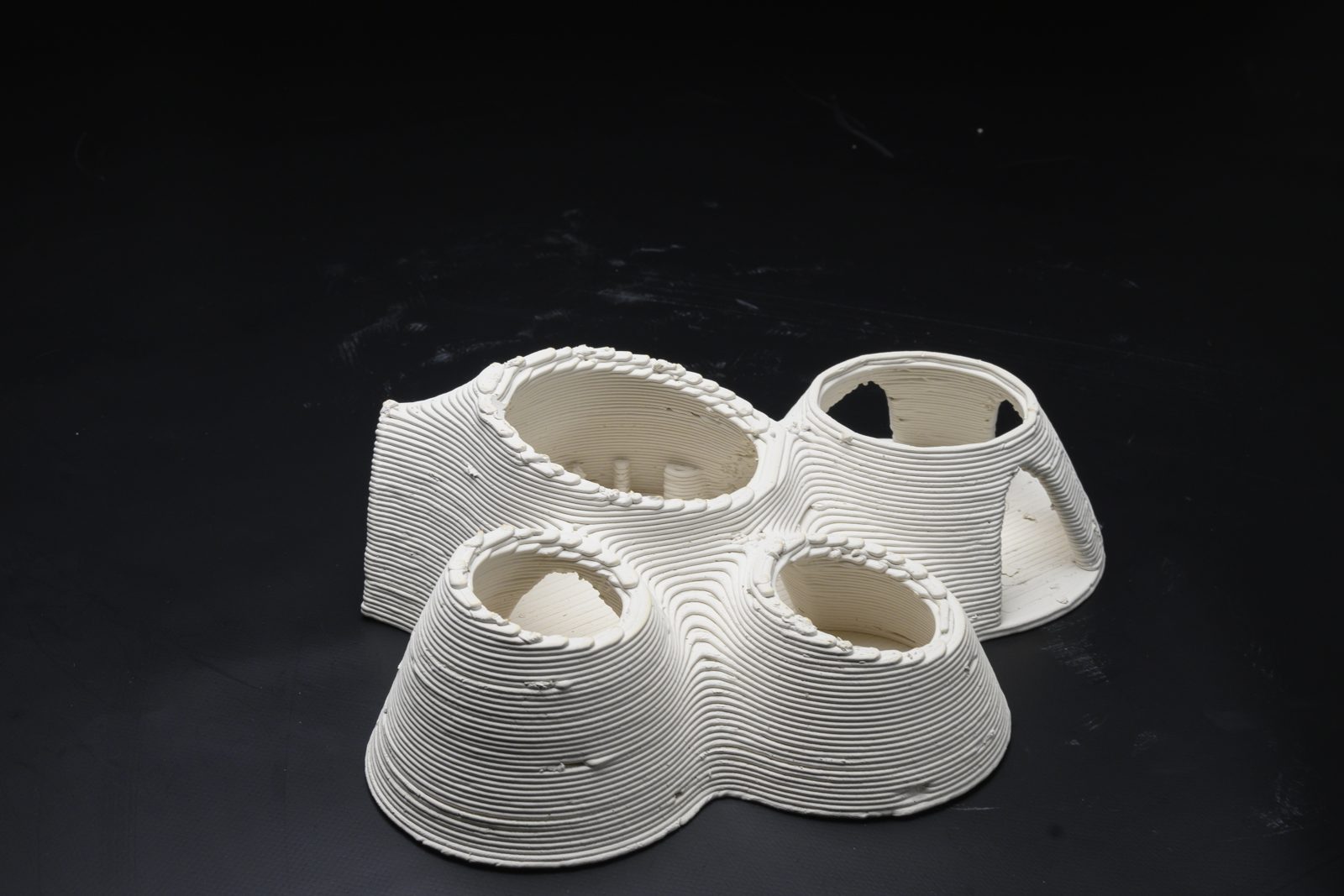
Southern Spain needs affordable homes that stay within ecological limits, and its semi-arid climate and clay soil suit building with raw earth. This project proposes a social housing typology that joins vernacular building knowledge with digital fabrication. The homes are intersecting earthen domes that work in compression only. Thermal mass, self-shading and chimney-effect ventilation keep them cool without machines, and guidelines written into a generative code let residents help design their own home.